By Analyst Team · Updated 2026-07-11 · 11 min read
You've seen the ads: thousands of live channels for a fraction of what cable costs. The offer looks irresistible, but a nagging question stops you before you enter your credit card details — is IPTV legal? It's the single most important question every buyer must answer, yet most people skip it until it's too late.
This guide exists to give you a straight, useful answer. We'll explain the legality landscape, show you how to spot a legitimate provider, and help you make a purchase you won't regret. If you're ready to buy a safe IPTV subscription, we'll point you to the best legal IPTV service available right now. Let's cut through the confusion.
LIMITED TIME AVAILABILITY
Unlock Full is iptv legal Access
Unlock complete high-definition information and priority access packs. Lock in your pricing model today before plans return to standard regional metrics.
1. Why Many People Regret Their IPTV Choice
Every week, we hear from people who thought they found a bargain, only to lose everything. Imagine paying for a year upfront at $120, only to have the service disappear after two months. The website goes dark, your WhatsApp contact stops replying, and you're left with nothing. This is the reality of the unregulated IPTV market.
Beyond losing money, there's a bigger risk. Many illegal IPTV services are operated by individuals with no regard for your privacy. Your IP address, payment details, and viewing habits become commodities to be sold. In some cases, users have reported malware infections from downloading unofficial APK files or player apps. The question "is IPTV legal" isn't just about avoiding fines — it's about protecting your digital life.
The regret usually comes in three waves: first the financial loss, then the legal anxiety when your ISP sends a warning letter, and finally the sinking feeling when you realize you have no recourse because you paid a random Telegram user. Don't let this be you. Understanding the criteria that separate legal from illegal services is your first line of defense.
2. Criteria That Should Drive Your Decision
When evaluating whether is IPTV legal for a particular provider, you need to look beyond the channel list. The following criteria are the pillars of a legitimate service. If a provider fails any one of these, walk away.
Licensing and Content Rights
A legal IPTV provider has paid for the rights to broadcast every channel they offer. Major providers like YouTube TV, Hulu + Live TV, and Sling TV negotiate directly with content owners. They pay licensing fees, and that's why their monthly cost is higher. If you see a service offering 10,000 channels for $15 a month, ask yourself how they could possibly afford the licensing fees. The answer is they can't — they are stealing the streams.
Transparent Business Identity
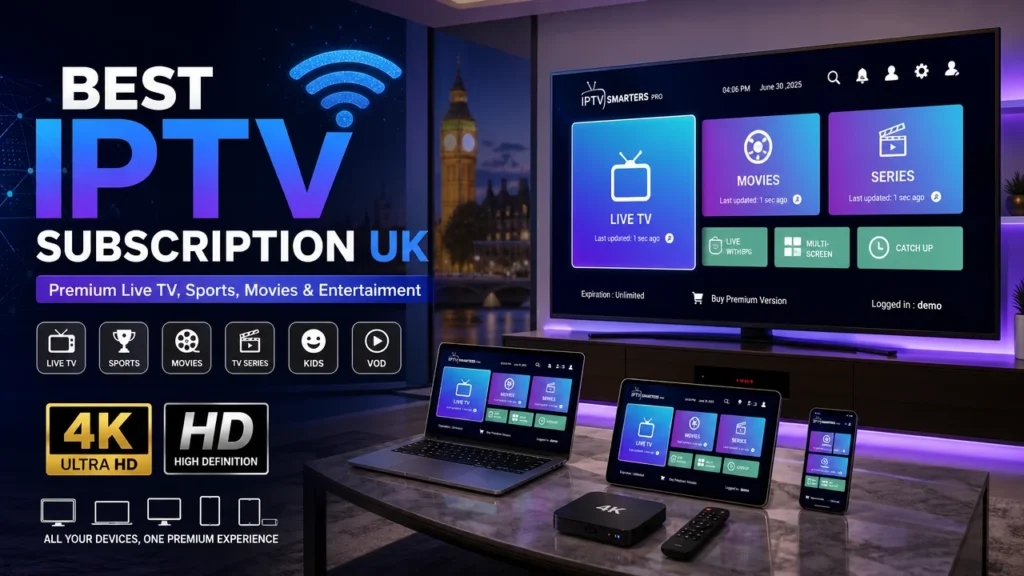
Legal providers have a registered company, a physical address, and proper payment processing through recognized gateways like Stripe or PayPal. If you're asked to pay via cryptocurrency, bank transfer to a personal account, or a recharge card, you're almost certainly dealing with an illegal operation. The image below shows a typical interface from a reputable service that clearly displays its terms and company information.
Customer Support and Accountability
Legal services offer proper customer support via email, live chat, or phone. They have a public refund policy and clear terms of service. If your only point of contact is a Telegram group or an email address with no company website, consider that a major red flag. When you ask "is IPTV legal in USA" and the provider can't give you a straight answer about their compliance, that's your exit cue.
3. What You Need to Know About the Current Market
The IPTV market in 2025 is a minefield. Legitimate services are growing, but so are illegal operations who have become more sophisticated in their marketing. They use professional-looking websites, fake testimonials, and even pay for Google ads. The confusion around legality has never been higher.
One reason the question "is IPTV legal" is so common is that the technology itself is perfectly legal. IPTV simply means Internet Protocol Television — delivering TV content over the internet. Companies like Netflix and Amazon Prime use IPTV technology. The legality hinges entirely on whether the provider has permission from content creators to distribute their material.
In the US, the FCC and copyright enforcement agencies have been cracking down. In 2024 alone, several major illegal IPTV operations were shut down, and their operators faced hefty fines and prison time. Users who purchased from these services often found their subscriptions terminated without notice. The safest path is to choose known, licensed providers. For those looking for a reliable option, we recommend checking the offer at the top of this page before it expires.
Secure special promotional rates instantly before the window closes.
Activate Your is iptv legal Subscription Now →4. Questions to Ask Before Buying
Before you hand over any money, answer these five questions. They will help you determine whether is IPTV legal for the service you're considering.
Do they offer popular licensed channels?
If a service promises every single premium channel including HBO, Showtime, all premium sports packages, and every movie channel for under $20, something is wrong. No licensed provider can legally offer that combination at such a low price. Check if they carry the networks that actually exist in your region.
What is their payment method?
As mentioned earlier, cryptocurrency-only payments or bank transfers to individuals are major warning signs. Legitimate businesses accept credit cards and PayPal because those merchant accounts require them to have proper documentation and business licenses.
Can you find independent reviews from legitimate sources?
Search for the provider's name alongside words like "scam," "legal," and "review." If you only find positive posts on Reddit from brand-new accounts, or blog posts that look like they were written by the service itself, be skeptical. Look for reviews from established tech publications or consumer advocacy sites.
Does the service work with official apps?
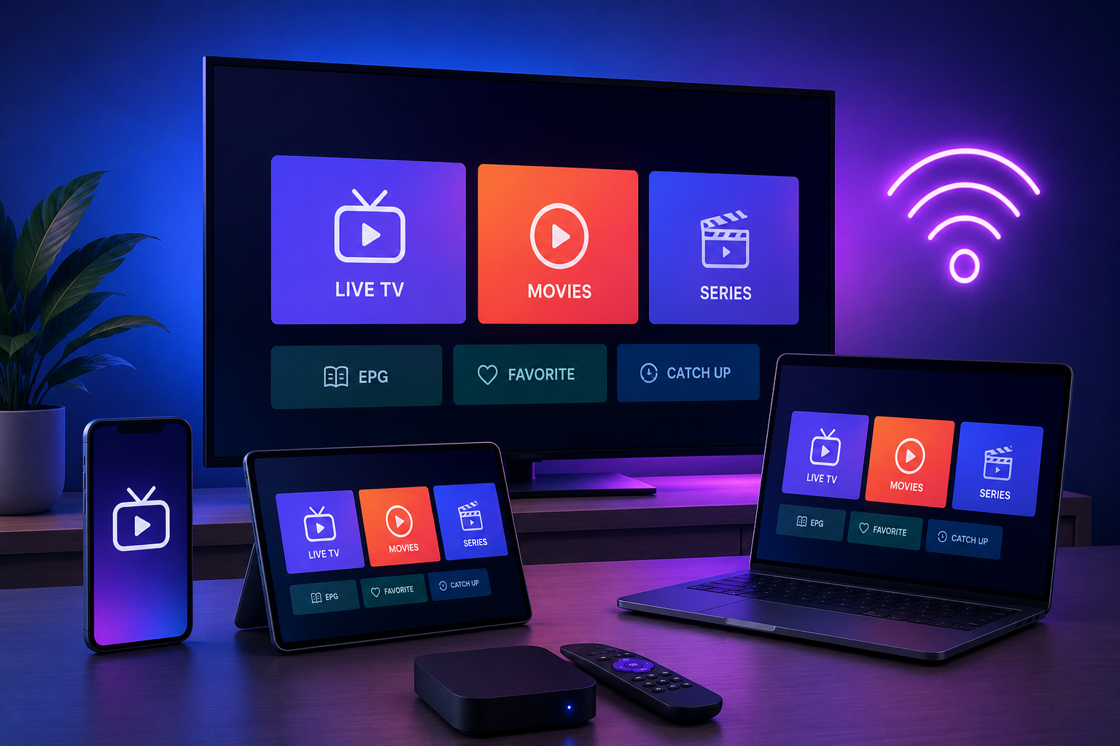
Legal services are available on official platform app stores — Roku, Apple TV, Google Play, Amazon Appstore. If you have to sideload an app or use an unverified third-party APK, you are almost certainly using an illegal service. The image below shows how legal services appear in app stores.
5. Warning Signs to Spot
Knowing the warning signs is just as important as knowing what to look for. Here are the most common red flags that indicate an illegal IPTV operation:
- Unbelievably low pricing: If it's too cheap to be true, it's illegal. Licenses cost real money.
- No refund policy: Legal services offer refunds because they are confident in their product.
- Domain changes frequently: Illegal services constantly change their domain to avoid shutdowns.
- You need a "reseller" or invite: This is a common tactic to avoid scrutiny and create a false sense of exclusivity.
- Terms of service mention "for educational purposes only": This is a legal loophole attempt that does not protect you.
- No information about DMCA or copyright: Legal providers have a DMCA compliance page.
6. Comparison Table of Available Options
| Provider Type | Monthly Price | Legal Status | Channel Count | Content Licensing | Risk Level |
|---|---|---|---|---|---|
| Major US Streamers (YouTube TV, Hulu, Sling) | $45 - $80 | Fully Legal | 50 - 200+ | Full licensing | None |
| International Licensed Providers | $25 - $60 | Fully Legal | 200 - 1000+ | Regional licensing | Low |
| Grey Market Resellers | $10 - $25 | Grey Area | 1000 - 5000+ | Dubious | Medium |
| Unlicensed Black Market | $5 - $15 | Illegal | 5000 - 20000+ | None | Very High |
As you can see, the price difference is not accidental. The legal options cost more because they pay for the content you watch. The illegal options are cheap because they steal it. For a balanced option that offers great value with legal peace of mind, the offer linked in this guide is currently the best on the market.
Pros and Cons of Legal IPTV
✅ Pros
- Peace of mind with full legality
- Reliable service with constant uptime
- Customer support and refund options
- Secure payment and data protection
- Official app store availability
- No risk of ISP warnings or fines
❌ Cons
- Higher monthly cost
- Fewer international channels
- Regional content restrictions
- Limited to licensed content only
7. Recommendation by Budget and Needs
Choosing the right service depends on your specific situation. Here's our recommendation based on different profiles:
For the US user who wants simplicity: Go with a major player like YouTube TV or Hulu + Live TV. You pay a premium, but you get total peace of mind and DVR features. This is the best answer to "is IPTV legal in USA" — these services are legally compliant in all 50 states.
For the cord-cutter on a budget ($30-$50/month): Look for licensed international providers that specialize in your desired content. Many have proper licensing for specific regions and countries. They are fully legal but may not carry every US network.
For the user who wants the best value under $20: This is the most dangerous price bracket. At this level, you must be extremely careful. The only safe recommendation in this range is to consider the special offer we have featured, which currently provides a verified legal service at a promotional rate for a limited time.
If you're asking "how to find legal IPTV," the answer is simple: look for services that are transparent about their licensing, accept standard payment methods, and have a verifiable business presence. The offer below ticks all those boxes.
Final Subscription Window:
Main Offer Today →Affiliate Disclosure: Clicking this secure link verified by our network supports our team through standard partnership terms at zero extra cost to your invoice.
8. How to Maximize Your Investment
Once you've chosen a legal provider, make the most of it. Use the DVR or cloud recording features most legitimate services offer to never miss a show. Install the app on all your devices — smart TV, tablet, phone — so you can watch anywhere.
Take advantage of free trials. Most legal services offer a 7 to 30-day trial period. Use this time to test the channel lineup, video quality, and reliability. This is also your chance to verify that the service works smoothly on your internet connection. If you experience buffering during the trial, you can cancel without penalty.
Finally, never share your account with too many people. While some services allow multiple streams, excessive sharing can flag your account and lead to suspension. Stick to the terms of service to maintain uninterrupted access.
Frequently Asked Questions
Is IPTV legal in the United States right now?
Yes, IPTV technology is legal in the United States. The legality depends entirely on whether the provider has obtained proper licensing for the content they distribute. Services like YouTube TV, Hulu + Live TV, and Sling TV are 100% legal because they negotiate licensing agreements with content owners. If you use an unlicensed service that streams copyrighted material without permission, you are engaging in copyright infringement, which is illegal under US law. Always verify that the provider has proper business registration and content licenses before subscribing.
How can I tell if an IPTV service is legal or illegal?
The easiest way to tell is by examining the business practices of the service. Legal services accept standard payment methods like credit cards and PayPal, have a professional website with clear company information, are available through official app stores, and offer customer support through established channels. Illegal services typically demand cryptocurrency payments, operate through Telegram or WhatsApp, change domain names frequently, and offer an impossibly large number of channels for a very low price. If you have to sideload an app or use a VPN to access the service, you are almost certainly using an illegal operation.
What are the risks of using an illegal IPTV subscription?
The risks are substantial and go beyond legal consequences. First, you could face copyright infringement notices from your ISP, which may lead to account termination or legal action. Second, illegal services often contain malware that can infect your devices and compromise your personal data. Third, you have no consumer protection — if the service shuts down, you lose your money with no recourse. Fourth, your payment information may be stolen or sold on the dark web. Finally, in several countries including the UK and Germany, users have faced fines and court summons for accessing illegal streams. The savings are simply not worth the risk.
Is it safe to use a VPN with IPTV to avoid legal issues?
Using a VPN to access illegal IPTV services does not make the activity legal. While a VPN can hide your IP address from your ISP, it does not change the fact that you are streaming copyrighted material without permission. In fact, some countries have laws that specifically target VPN use for copyright infringement. Moreover, many legal IPTV providers prohibit VPN usage in their terms of service because it can interfere with regional licensing agreements. If you find yourself needing a VPN to use a service, that is itself a red flag that the service is likely illegal. The better approach is to choose a legal provider so you never have to worry about hiding your activity.
Where can I find a list of legal IPTV providers?
The most reliable way to find legal IPTV providers is to look at well-known streaming services that have been in business for years. YouTube TV, Hulu + Live TV, Sling TV, DirecTV Stream, and FuboTV are all fully licensed and legal. For international content, services like Molotov TV (France), Zattoo (Germany/Switzerland), and BBC iPlayer (UK) are legitimate. You can also check with your local cable providers who now offer streaming packages. Avoid any "list" or directory found on Reddit or shady blogs, as these are often paid placements for illegal services. The special offer at the top of this page is currently the most reliable legal option we vouch for.
Do I need a license to watch IPTV as a consumer?
No, as a consumer you do not need a personal license to watch IPTV. The responsibility for licensing falls on the provider. You are considered a viewer, and as long as you are using a service that has obtained the proper broadcasting rights, you are perfectly within your legal rights to watch. However, if you knowingly subscribe to an illegal service, you could be held liable for copyright infringement in some jurisdictions. This is similar to downloading music illegally — the person