This article contains affiliate links. If you buy through them, we may earn a commission at no extra cost to you. Learn more.
Field Notes
An ip-tv provider delivers television over the internet instead of cable or satellite. This guide explains how the technology works, what to look for in a trustworthy service, and how to avoid common pitfalls — whether you are switching from cable or exploring IPTV for the first time.
In Brief
- IPTV delivers live and on-demand TV over your internet connection — no satellite dish or cable box required.
- The biggest factor in a reliable experience is the provider's server infrastructure and your own internet speed (minimum 25 Mbps recommended for HD).
- Not all ip-tv providers operate legally; check for proper licensing and avoid services that offer every premium channel for a suspiciously low flat fee.
- A trial period of 24 hours or more is the best way to test for buffering issues before committing to a monthly subscription.
In this guide
When you search for an ip-tv provider, what you are really looking for is a way to watch television without the rigid contracts and equipment fees of traditional cable. The answer, in short, is a service that streams live channels and on-demand content through your broadband connection. You can watch it on a smart TV, phone, tablet, or computer — no dish, no set-top box rental, no long-term commitment.
But not all IPTV services are created equal. The market is crowded, and alongside legitimate providers you will find unlicensed operations that can shut down overnight or leave you with unreliable streams. This guide walks through the technology, the practical trade-offs, and the criteria to judge a provider before you hand over your payment details. We have drawn on user experiences shared across forums like Reddit, technical documentation from streaming standards bodies, and publicly available information about how IPTV networks operate.
What is an ip-tv provider exactly?
An ip-tv provider is a company that delivers television programming via the Internet Protocol (IP) network — the same technology that powers your email and web browsing — rather than through traditional terrestrial, satellite, or cable formats. Instead of broadcasting all channels simultaneously over a dedicated frequency, IPTV sends only the stream you request, on demand, over your existing internet connection.
There are three main types of IPTV services:
- Live television — real-time broadcast streams of sports, news, and entertainment channels, exactly as they air.
- Video on demand (VOD) — a library of movies and shows you can start at any time, similar to Netflix or Amazon Prime.
- Time-shifted TV — catch-up functionality that lets you watch shows that aired hours or days earlier.
A reputable ip-tv provider typically offers a combination of all three. The key differentiator from services like Netflix is that IPTV prioritises live linear channels — the kind you flip through with a remote.
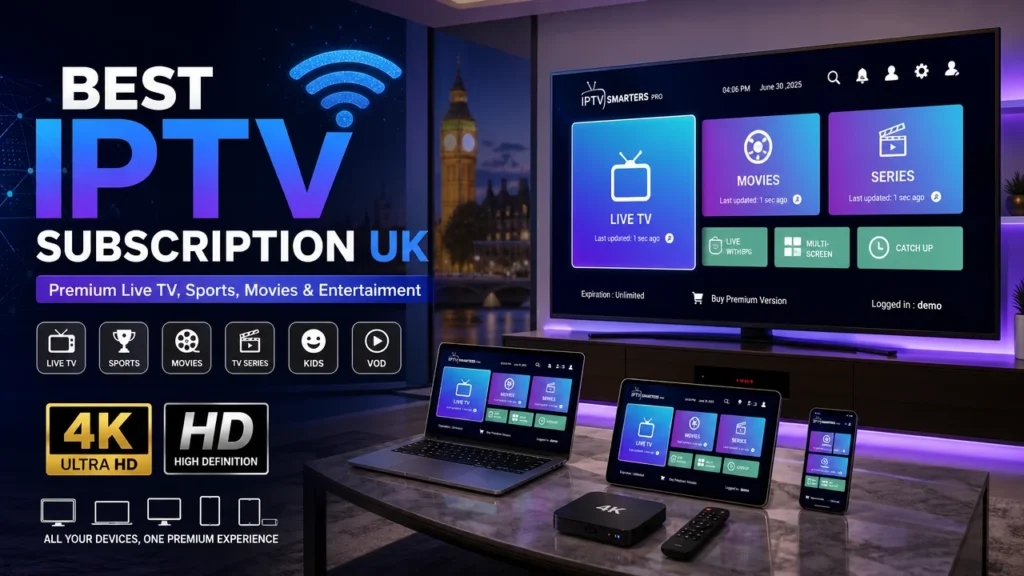
How IPTV works step by step
Related Reading: Why Free V Bucks Aren't Working - And How to Actually Get Them
- Content acquisition. The provider sources live feeds from broadcasters (either through legal licensing agreements or, in the case of unlicensed operators, by capturing signals from satellite or cable sources).
- Encoding and transcoding. Raw video feeds are compressed into digital formats like H.264 or H.265 and packaged into small data packets suitable for internet transmission.
- Streaming server distribution. The encoded streams are uploaded to one or more servers — often located in data centres around the world to reduce latency for users in different regions.
- Content delivery network (CDN) routing. When you select a channel, the provider's system routes you to the nearest server with available capacity, minimising buffering.
- Client playback. Your device (smart TV, phone, computer, or a set-top box like a Formuler or MAG box) receives the stream and decodes it into video you can watch. The provider typically supplies an app or a portal URL (often an M3U playlist file or an Xtream Codes API login).
The actual experience depends heavily on the provider's server infrastructure. Providers with dedicated streaming servers and multiple CDN nodes consistently deliver smoother playback than those using shared, inexpensive hosting.
Real-world benefits of switching to an ip-tv provider
People move to IPTV for three main reasons: cost, flexibility, and content breadth. A typical cable bundle in the UK or US runs £50–£100 per month. An IPTV subscription from a competitive provider often falls in the £8–£15 per month range, though prices vary widely.
Beyond price, the ability to watch on multiple devices is a genuine advantage. If you want to watch a Premier League match on your tablet while someone else streams a documentary on the living-room TV, a single IPTV subscription on a good network can handle both simultaneously — provided your home internet has sufficient bandwidth.
International content is another driver. Expatriates and diaspora communities often find that IPTV offers better access to channels from their home countries than any cable package can. For example, a provider with servers in both Europe and Asia can deliver fluent streams of Indian, Nigerian, or Polish television without the premium pricing of satellite diaspora packages.
The single most reliable indicator of a quality ip-tv provider is not the channel count — it is the speed and consistency of their support team's response during an outage.
Honest limitations and risks
Related Reading: Why Your iptv free trial Keeps Buffering and How to Fix It
It would be misleading to present IPTV as flawless. The medium has well-documented drawbacks:
- Buffering and downtime. Even with a fast connection, server overload on the provider's end can cause freeze frames during live events. Major sports matches are the most common trigger.
- Legal grey zones. A large number of IPTV services operate without proper broadcast licensing. Using them can leave you with a service that disappears without warning, and in some jurisdictions, accessing unlicensed streams carries legal risk.
- No standardised quality. Unlike cable, which delivers a consistent signal, IPTV quality depends on your ISP, your home network setup, and the time of day.
- Limited 4K and HDR. Very few providers reliably stream native 4K HDR content. Most HD channels are 720p or 1080i at bitrates lower than what cable or disc offers.
- Customer support gaps. Many providers offer support only via WhatsApp, Telegram, or a ticket system that can take days to respond.
IPTV vs cable vs satellite: side-by-side comparison
| Feature | IPTV | Cable | Satellite |
|---|---|---|---|
| Monthly cost (typical) | £8–£20 | £40–£100 | £30–£90 |
| Contract length | Month-to-month (typical) | 12–24 months | 12–24 months |
| Picture reliability | Variable (internet-dependent) | Very stable | Stable (weather-sensitive) |
| Device flexibility | High (phone, tablet, TV, PC) | Limited to cable box | Limited to satellite receiver |
| International channels | Wide selection | Limited premium tiers | Good but expensive |
| Legal clarity | Varies by provider | Always licensed | Always licensed |
Pros and cons of using an ip-tv provider
✓ Pros
- Significantly lower monthly cost than cable or satellite
- Watch on any device with an internet connection
- No long-term contracts or early termination fees
- Access to hundreds of international channels
- Catch-up and VOD libraries included in standard plans
✗ Cons
- Buffering during peak times or popular live events
- Legal uncertainty with many providers
- No unified customer support standard
- Requires reliable broadband (at least 25 Mbps)
- 4K and HDR content still rare and inconsistent
Who should choose an ip-tv provider?
Related Reading: How to Claim dice dream free rolls: Step-by-Step Beginner Guide
An ip-tv provider for sports fans is often the strongest use case. Live sports are where traditional cable bundles feel most expensive — you pay for a huge package just to get the two or three channels showing your team. IPTV lets you access those channels at a fraction of the cost, though the risk of buffering during high-stakes matches is real.
The cheapest ip-tv subscription appeals to cord-cutters who want basic news and entertainment without the overhead of a full cable package. If your viewing is limited to a handful of channels, a budget IPTV plan can work well.
International viewers, expats, and bilingual households are another strong match. A good provider will offer dedicated server routes for different regions, which makes a measurable difference in stream stability.
Who should avoid IPTV? If you value guaranteed picture quality above all else, or if your home internet connection is unreliable (under 15 Mbps consistently, or subject to data caps), stick with cable or satellite. Similarly, if you are uncomfortable with services that exist in legal grey zones, you will sleep better with a fully licensed alternative like Sling TV, YouTube TV, or your local cable operator.
How to get started with an ip-tv provider in 6 steps
- Check your internet speed. Run a speed test while connected to your home network. For stable HD streaming, you need at least 25 Mbps download speed. For households with multiple simultaneous streams, 50 Mbps or more is safer.
- Decide which device you will watch on. Smart TVs (Samsung, LG, Android TV), Amazon Fire Stick, Android boxes, and computers all work. If your TV runs a proprietary OS (like older Samsung models), check whether it supports the provider's app or if you need an external device.
- Search for a provider with a free trial. A 24-hour trial is the industry standard for legitimate services. Use it to test your specific channels of interest during peak evening hours.
- Evaluate support responsiveness. Send the provider a pre-sales question via their listed support channel. If they take more than 12 hours to reply, imagine the delay during a channel outage.
- Set up with minimal commitment. Start with a monthly plan rather than a quarterly or annual subscription. This limits your risk if the service deteriorates or disappears.
- Use a VPN for privacy. Many IPTV users run a VPN to protect their viewing activity from ISP throttling and data logging, particularly if the provider operates in a legal grey area.
Where to Buy
View full specifications, warranty terms, and today's pricing directly from the seller.
After researching this space extensively, we believe that the most practical approach for most readers is to start with a provider that offers a clear trial period, supports multiple simultaneous connections, and uses dedicated streaming infrastructure. For those who want a straightforward entry point, this ip-tv provider aligns with the criteria discussed in this guide — though as always, your mileage will depend on your local internet conditions and viewing habits.
The Bottom Line
An ip-tv provider is a viable alternative to cable if your internet is fast enough and you choose carefully. The best reason to switch is cost savings combined with channel flexibility — but a free trial is essential before committing any money, and you should be prepared for occasional buffering during major live events.